
Welcome to Module 6: Space to Thrive.
The spaces where we work and learn are not neutral. For ADHD brains, environmental factors — lighting, noise, visual clutter, movement — can be the difference between a productive day and a depleted one. This module shifts focus from fixing the ADHD individual to adapting the environment. You will explore workspace design, flexible scheduling, collaborative support, and inclusive design — leaving with at least one concrete change you can make today.
Core Objectives
By the end of this module, you will be able to:
- Recognise how physical and digital environments affect ADHD learners’ focus and well-being.
- Apply practical adaptations (lighting, organisation, digital tools) to make spaces ADHD-friendly.
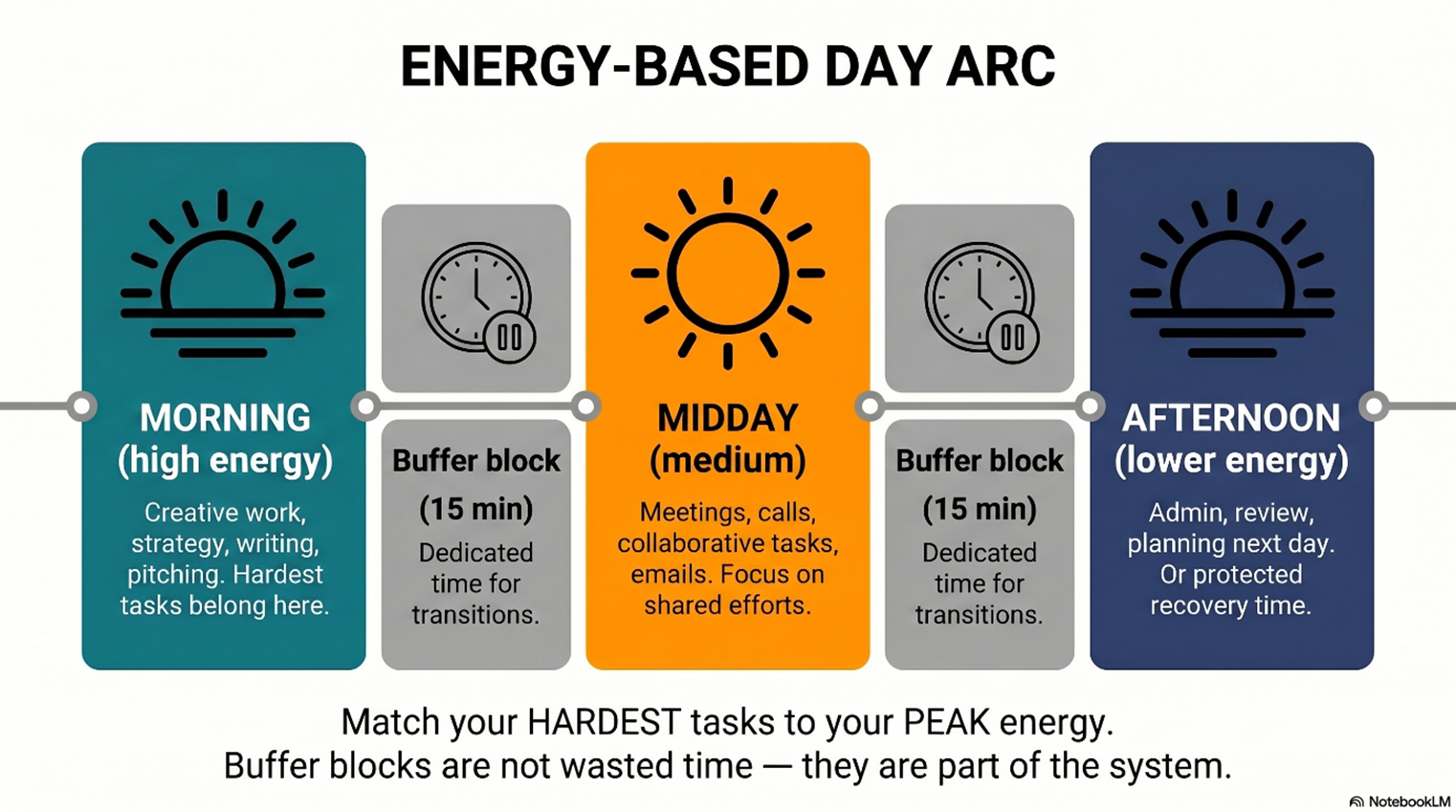
- Design flexible routines that align with individual energy rhythms to counter "time blindness."
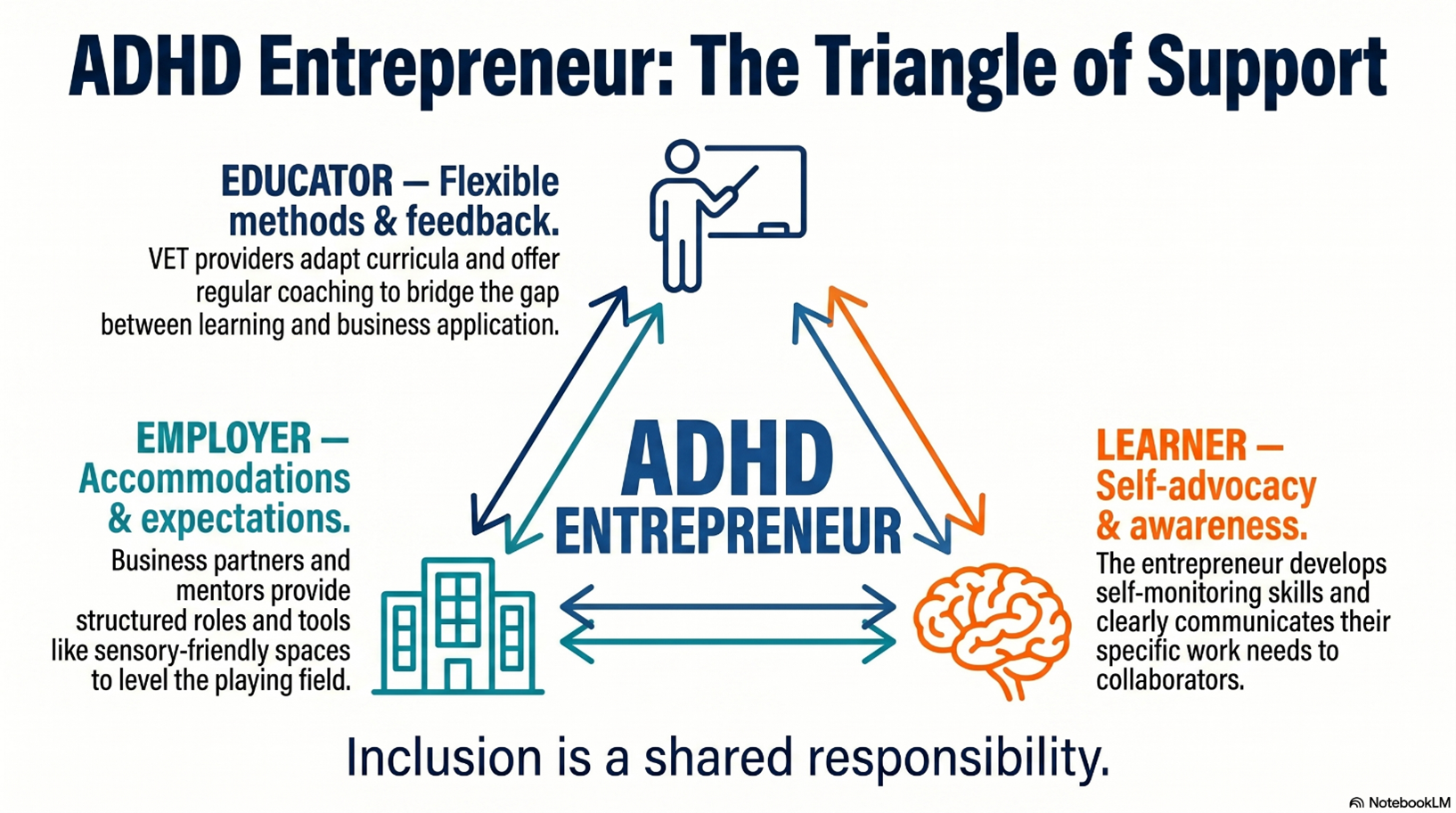
- Implement shared support strategies using the "Triangle of Support" (Trainer, Employer, Learner).
- Promote inclusive experiences that offer choices, leverage strengths, and reduce stigma.
Your learning path:
Unit 1: Adapting Physical and Digital Workspaces
Recognising sensory sensitivity and environmental overload in the ADHD brain
Adapting lighting, sound, and visual clutter to reduce cognitive load
Integrating movement options (like standing desks or wobble stools) to sustain focus
Decluttering digital workspaces using website blockers and visual task managers
Unit 1: Adapting Physical and Digital Workspaces
Unit 2: Flexible Scheduling & Personalised Workflows
Understanding "Time Blindness" and moving away from the rigid 9-to-5 myth
Implementing flexible time-blocking and mandatory buffer zones
Mapping your personal energy peaks to schedule high-focus and low-focus tasks
Using task initiation tools like the Pomodoro Technique, Body Doubling, and gamification
Unit 3: Building Support Networks (Collaboration)
Shifting from isolated expectations to shared, collaborative support
Deploying the "Triangle of Support" between Trainers, Employers, and Learners
Defining clear roles and accommodations for each stakeholder
Using short, regular check-ins to improve workflows rather than blaming individuals
Unit 3: Building Support Networks (Collaboration)
Unit 4: Designing Inclusive Experiences
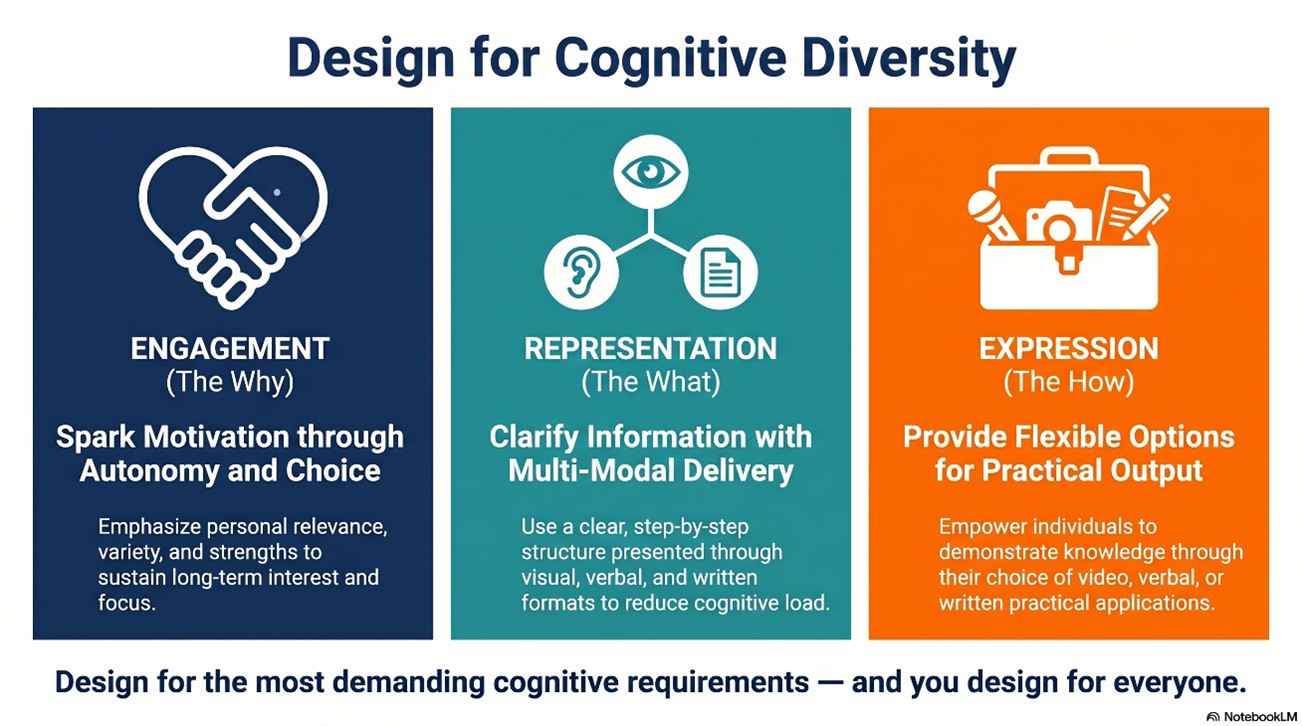
Moving beyond ticking boxes to offer true flexibility, autonomy, and choice
Providing clear visual structures and step-by-step guides instead of relying on memory
Leveraging ADHD strengths like hyperfocus and rapid brainstorming
Reducing stigma with "grace periods" and embedding regular feedback loops
Fun Fact: Research shows that environmental factors such as lighting, noise level, and workspace organisation significantly affect cognitive load and attention in individuals with ADHD — and that targeted environmental modifications can improve focus and task completion without any change in medication or clinical intervention. (Barkley, 2015)


This unit explores how sensory overload and visual clutter drain executive function — and gives you practical ways to adapt your physical and digital environments for better focus.
Learning Objective: Identify your biggest workspace distraction and apply at least one sensory or visual adaptation to reduce cognitive load.
Case Example Introduction
Meet Taylor: Your Module Protagonist
Taylor is an ADHD entrepreneur running a growing e-commerce business. Taylor works from home but recently hired their first Vocational Education (VET) apprentice. Taylor is currently exhausted by the sensory overload of their messy home office, and struggling to impose a strict 9-to-5 schedule on both themselves and the new apprentice. Throughout this module, watch how Taylor redesigns the environment and routines to support both of their neurodivergent minds.
1.1. Why Environment Matters More for ADHD Brains
People with ADHD often experience heightened sensitivity to environmental stimuli — noise, lighting, visual clutter — which increases cognitive load and reduces available attention for actual work. Traditional offices and classrooms assume everyone can filter background noise and focus for long stretches. ADHD brains experience these environments differently: sensory input arrives more intensely, and the cost of an unsupportive environment accumulates faster.
The good news: targeted environmental changes — often small and low-cost — can have a disproportionate positive impact. Spaces are not just backdrops. They are tools.
1.2 The ADHD-Friendly Setup
To create an environment where an ADHD brain can thrive, you must adapt the sensory inputs:
- Lighting: Replace harsh, flickering fluorescent lights with warm desk lamps. Allow the individual control over brightness.
- Sound: Provide quiet areas or use noise-cancelling headphones and white-noise apps to block unpredictable background sounds.
- Clutter & Visual Structure: Keep only essential items visible. Use clear containers and a visual Kanban board (To-Do / Doing / Done) to externalise your workflow.
- Movement: The ADHD brain works best when the body can move. Physical activity directly increases the brain's concentration of dopamine and norepinephrine, physically transforming the brain for peak performance and sustained attention (Ratey, 2008). Use standing desk converters, exercise balls, or keep small fidget tools near the keyboard.
- Digital Organisation: Use website blockers (like Freedom) to limit distractions, and close unused browser tabs at the end of every day.

Taylor Moment: > Taylor’s desk was covered in loose papers, and the bright overhead light triggered daily headaches. Taylor spent one hour completely clearing the desk, bought a warm desk lamp, and hung a whiteboard to track active orders. By reducing the visual and sensory "noise," Taylor could work an extra two hours a day without feeling completely drained.
TRY THIS NOW: The 5-Minute Workspace Audit — ⏱️ 5 minutes Look at your current workspace (physical or digital). Identify the single biggest distraction right now. Is it a pile of papers? Too many open browser tabs? Harsh light? Pick one thing to change immediately (e.g., turn off the overhead light and turn on a lamp). Notice the difference in your focus.
1.3 Digital Workspace: The Invisible Clutter Problem
Digital environments carry the same risks as physical ones — but are less visible and harder to address.
Digital Challenge | ADHD Impact | Solution |
|---|---|---|
Too many open browser tabs | Constant visual distraction and task-switching temptation | Use one tab group per project; close all others |
Notification sounds and banners | Interrupt flow and trigger attention shifts | Turn off all non-urgent notifications during focus blocks |
Cluttered desktop or inbox | Visual overload; unclear where to start | Weekly 10-minute digital declutter ritual |
Social media available at all times | Impulse-checking breaks flow repeatedly | Use app blockers (Freedom, StayFocusd) during deep work |
Task lists spread across multiple apps | Working memory drain trying to remember which list to check | One system only — Trello, Notion, or Todoist |
1.4 Body Doubling: The Social Focus Hack
Working alongside another person — physically or virtually — is one of the most effective and underused ADHD focus tools. You don't need to work on the same task. You don't need to talk. The social presence alone activates the brain's reward system and increases sustained attention. Options: work at a café, co-work via Focusmate.com, or call a friend and work in shared silence. (Lovering, 2022)
⚡ ACTIVITY — Workspace Audit
Take 5 minutes right now to observe your current workspace — physical or digital.
What do you notice? Lighting — too bright / too dim / flickering / uncomfortable: _______________ Sound — too noisy / unpredictable / distracting: _______________ Visual clutter — desk / desktop / open tabs: _______________ Movement — can you stand, move, or fidget comfortably? _______________ Zones — is it clear what type of work happens where? _______________
Now choose TWO changes you will make this week:
Change 1:_______________ Why:_______________
Change 2: _______________ Why: _______________
Put a reminder in your calendar for Friday to note what difference these changes made.
TAYLOR MOMENT: Taylor used to work at a large shared desk in a co-working space — open plan, fluorescent lights, and a background hum of conversations and phone calls. By midday, Taylor was depleted regardless of how much sleep they had gotten. "I thought I just wasn't a morning person," Taylor said. "Actually, I was spending all my cognitive energy filtering the environment." Taylor rented a small private office one day per week for deep creative work, and added noise-cancelling headphones and a warm desk lamp for the shared days. On the home setup, Taylor created three physical zones with tape on the floor: focus, creative, break. "It looks absurd," Taylor said. "But my brain now knows what it is supposed to be doing the moment I sit down in each zone."
Exploring Core Values & Personal Strengths
Clarifying your values and strengths is vital for sustaining motivation and focus, especially with ADHD. When your goals align with what matters most, tasks feel more purposeful and engaging.
- Core Values: Values act as your guiding principles. Use the free Life Values Inventory to sort and rank what truly drives you, creating a strong anchor for goal-setting and daily choices. Link: https://www.lifevaluesinventory.org/
- Personal Strengths: Focusing on your strengths—rather than just your challenges—builds confidence and resilience. Discover your top traits using the free VIA Character Strengths Survey and apply them to approach your work with greater energy and creativity. Link: https://www.viacharacter.org/
Quick Check ✓
Can you name three environmental factors that most affect your ADHD focus? Have you identified at least two workspace changes to make this week? Do you know the difference between your focus zone and your break zone? If yes — you are ready for Unit 2.
Unit 1 — Reflection Questions:
- What sensory element disrupts your focus most — light, sound, clutter, or something else?
- If you could make one change to your workspace today with no budget needed, what would it be?
- What digital habit costs you the most attention throughout the day?
"Small environmental changes — such as softer lighting and a visible task board — can improve ADHD focus without any other intervention."
TRUE
a) Using colour-coded visual task boards
b) Removing all sources of stimulation, including visual tools
c) Allowing movement or fidgeting during work
d) Adjusting lighting to reduce sensory overload
b) Removing all sources of stimulation, including visual tools


Final Takeaway
"You don't have to do ADHD alone — and you don't have to mask it to succeed."
Resource name | Type | Link |
|---|---|---|
Top 10 Tech Tools to Support ADHD and Executive Functioning | Website | |
The Connection Between ADHD and Entrepreneurship | Website | https://www.theminiadhdcoach.com/living-%20with-adhd/adhd-entrepreneurship |
Those With ADHD Might Make Better Entrepreneurs. Here's Why. | Website | |
ADDitude — Home Office Setup Tips for ADHD | Article | https://www.additudemag.com/slideshows/home-office-setup-adhd-productivity/ |
HowtoADHD — Workspace Setup Guide | Article | |
ADHD Energy Mapping Guide | Article | https://imbusybeingawesome.com/adhd-goal-setting-energy-type/ |
ADDitude — ADHD and Motivation | Article | https://www.additudemag.com/adhd-motivation-problems-getting-started-on-tough-projects/ |
NeurodiversityHub — Neurodiversity in the Workplace | Website | |
CAST — Universal Design for Learning Guidelines | Website | https://www.cast.org/impact/universal-design-for-learning-udl |
MindTools — How to Give Feedback | Article |
Resource name | Type | Link |
|---|---|---|
Freedom App — Digital Focus Tool | Tool | |
StayFocusd — Browser Distraction Blocker | Tool | |
Time Timer — Visual Timer | Tool | |
Focusmate — Virtual Body Doubling | Tool | |
Trello — Visual Task Management | Tool | |
Notion — Flexible Project Workspace | Tool | |
Habitica — Gamified Task Management | Tool |
Resource Name |
Type |
Link |
|---|---|---|
ADHD Foundation UK |
Organisation |
|
ADHD Ireland |
Organisation |
- Armstrong, T. (2010). Neurodiversity: Discovering the extraordinary gifts of autism, ADHD, dyslexia, and other brain differences. Da Capo Press.
- Barkley, R. A. (2015). Attention-deficit hyperactivity disorder: A handbook for diagnosis and treatment (4th ed.). Guilford Press.
- CAST. (2018). Universal Design for Learning guidelines version 2.2. http://udlguidelines.cast.org
- Hallowell, E. M., & Ratey, J. J. (1994). Driven to distraction. Pantheon Books.
- Lovering, N. (2022). ADHD body doubling. PsychCentral. https://psychcentral.com/adhd/adhd-body-doubling
- Meyer, A., Rose, D. H., & Gordon, D. (2014). Universal design for learning: Theory and practice. CAST Professional Publishing.
- Ratey, J. J. (2008). Spark: The revolutionary new science of exercise and the brain. Little, Brown and Company.
- Söderlund, G. B. W., Sikström, S., & Smart, A. (2007). Listen to the noise: Noise is beneficial for cognitive performance in ADHD. Journal of Child Psychology and Psychiatry, 48(8), 840–847.
- Toplak, M. E., & Tannock, R. (2005). Time perception in attention-deficit/hyperactivity disorder. Journal of Abnormal Child Psychology, 33(5), 639–654.
DRIVE is designed to empower ADHD entrepreneurs. We offer tailored support, resources, and training programs that leverage the unique strengths of ADHD minds.
Our mission is to help individuals with ADHD develop their entrepreneurial skills, overcome common challenges, and build successful businesses.
The project started 01/10/2024, and the end date is 30/09/2026. Project reference number: Erasmus+ KA220 - 2024-1-CZ01-KA220-VET-000248121. The project is realized by international partners with various backgrounds (see more in the section “Partners”)

Funded by the European Union. Views and opinions expressed are however those of the author(s) only and do not necessarily reflect those of the European Union or the European Education and Culture Executive Agency (EACEA). Neither the European Union nor EACEA can be held responsible for them.
Have questions or interested in collaborating?
We'd love to hear from you! Project coordinator: Dr. Jana Pitrova, pitrovaj@pef.czu.cz
Please select your language for the country specific contacts.